Left-Handed Kids & Cartoon Safety Scissors: Do They Cut?
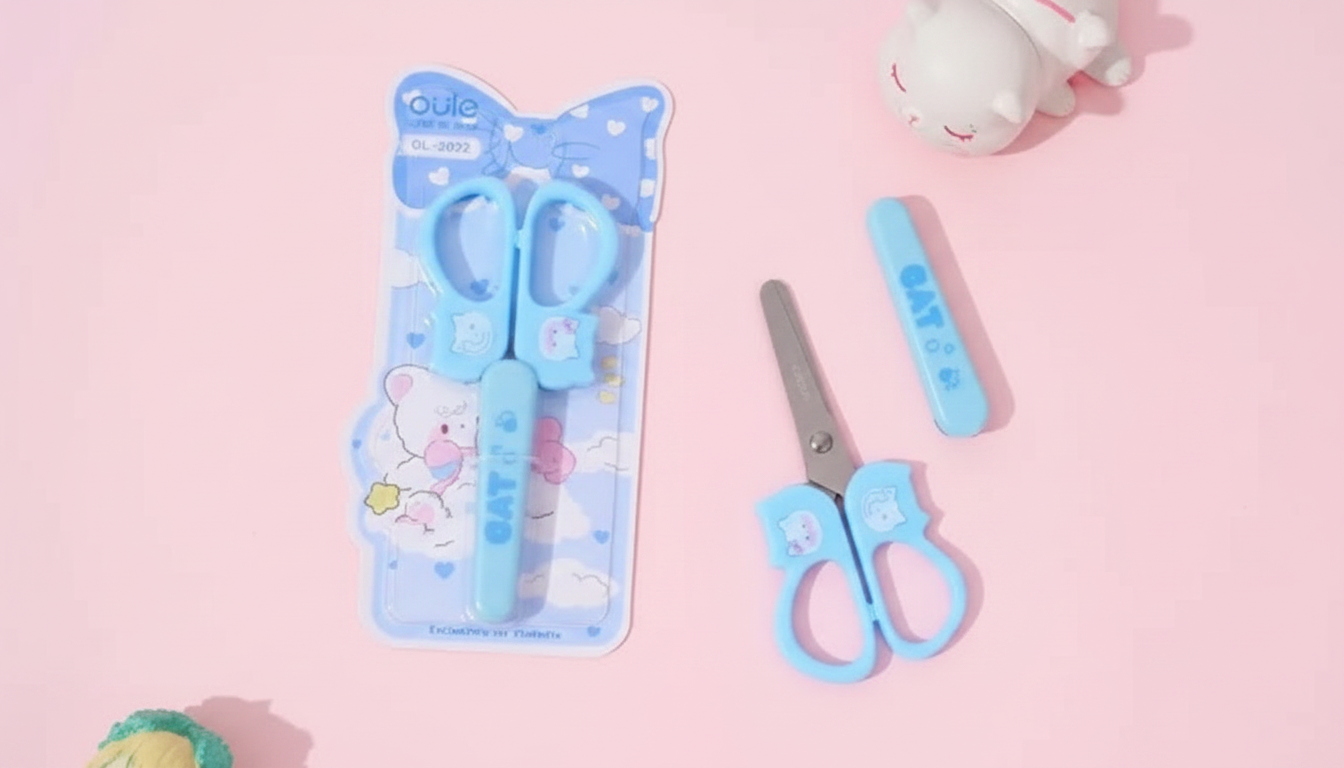
Do these cartoon children’s safety scissors work for left-handed kids?
They can work for some left-handed kids, but it depends on how the blades are built. Many “kids’ safety scissors” with cute cartoon handles are designed with right-handed blade orientation, even when the grips look symmetrical. For a left-handed child, that can mean the paper bends instead of cutting cleanly, the blades push apart while squeezing, or the child has to twist their wrist to see the cutting line.
What matters most for left-handed cutting
Blade orientation (more important than the handle)
True left-handed scissors flip the blade arrangement so the left hand naturally presses the blades together and the cutting edge stays visible. If these cartoon safety scissors are right-handed blades, a lefty may still be able to snip thin paper, but longer cuts and thicker materials can become frustrating.
Ambidextrous designs
Some children’s safety scissors are marketed as “ambidextrous,” usually meaning the handles can be held in either hand. That helps with comfort, but it doesn’t always solve the blade-orientation issue. If the product uses a centered, guarded, or plastic-covered blade style that cuts with pressure rather than a classic shearing action, it may perform more evenly for both hands.
Comfort and control for small hands
Left-handed kids often do better with short blades, a smooth hinge, and a grip that doesn’t force the thumb into an awkward angle. If the finger holes are tight or the hinge is stiff, they may compensate by squeezing harder, which reduces accuracy and safety.
How to quickly test at home
Have your child cut a straight line on regular printer paper using their left hand. If the cut stays on the line without the paper folding away from the blades, and they can see the line while cutting, the scissors are likely workable. If the paper crumples, the cut drifts, or they complain it “won’t cut,” consider a true left-handed pair.
For the specific details on the cartoon children’s safety scissors and what to look for before buying, visit the full guide here: https://juniorbright.shop/do-these-cartoon-children-s-safety-scissors-work-for-left-handed-kids/.
FAQ
Are safety scissors good for teaching kids proper cutting skills?
Yes—especially for preschool and early elementary ages, since they reduce the risk of injury while kids practice grip, hand strength, and staying on a line. Choose a pair that cuts cleanly with light pressure so the child learns control rather than forcing the cut.







Leave a comment